Tire Buying Guides
A Guide to Mud Tires: Dominating the Off-Road in 2026 and beyond

Free shipping
Best price guarantee
SimpleCrew exclusive savings
0% APR Financing
Tire replacement coverage
24/7 roadside assistance
Easy returns
Tire Buying Guides
Off-road enthusiasts often face a tough choice: all-terrain vs. mud tires. While all-terrain tires are versatile, true mudding requires specialized rubber. If you frequently navigate loose soil, deep bogs, or rocky trails, mud tires are essential. Using standard all-season or highway-terrain tires in these conditions often leads to "spinning in place" because their narrow tread voids cannot self-clean.
Mud-terrain (M/T) tires are engineered with oversized tread blocks and reinforced sidewalls. They provide maximum grip by "biting" into unstable surfaces. They are most commonly found on:
When hunting for the top mud tires, consider these three primary advantages:

Learning how to pick mud tires involves balancing performance, comfort, and budget. For those seeking affordable mud tires without sacrificing quality, brands like Falken and Firestone offer excellent value.
To maximize your ATV's potential, look for these specific traits:
For heavy-duty pickups, top mud tires like the Mickey Thompson Baja Boss M/T offer a balance of off-road prowess and on-road manners.
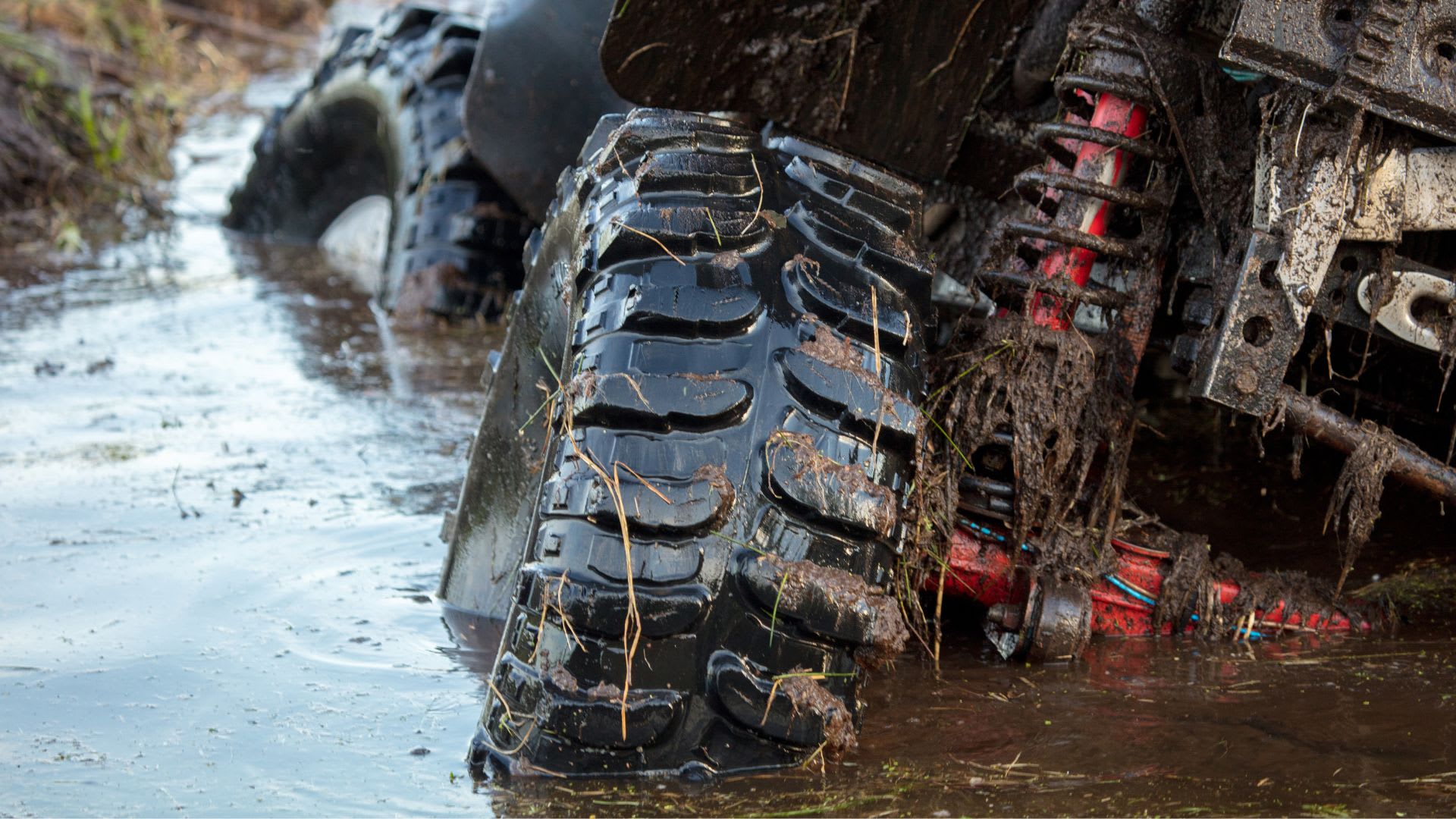
Even with the best mud tires, technique matters. To avoid getting stuck, follow these rules:
To get the most out of your investment, inspect your tires after every mudding session.
Reading a mud tire is similar to standard tires, but look for the "M/T" designation. The size (e.g., 35x12.50R15) tells you the height, width, and wheel diameter. Check the sidewall for "Load Range" to ensure it fits your truck's weight requirements.
Most mud tires are fine in snow, and some provide strong performance. They excel in loose snow because of their "scooping" action. However, on hard-packed ice, they can be slippery because they lack the siping (small slits) found on dedicated winter tires. It is important to check if your mud tires are Three Peak Mountain Snowflake certified, as this means their rubber compounding and performance are proven to work in moderate to severe winter weather. Additionally, some mud tires can be pinned with studs (where permitted) to further enhance winter performance.
You may also be interested in:
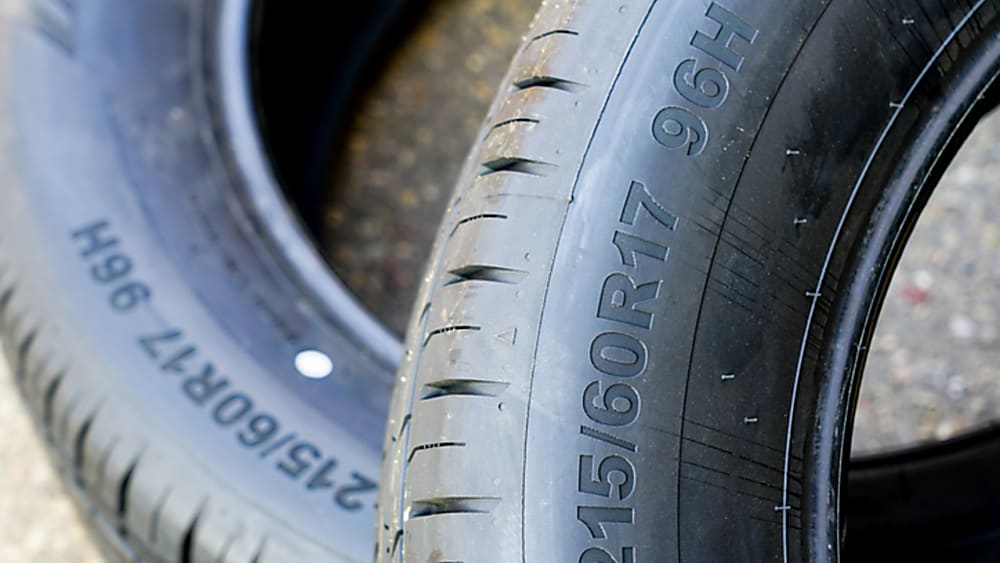
Speed ratings inform automakers and vehicle owners of the maximum speed capability of their tires. Here’s everything else you should know about tire speed ratings.
Tire load rating is important to consider for the assurance of vehicle safety. Find excellent information on tire facts & load ratings specifically at SimpleTire.com.
Are Puncture-Resistant Tires Worth the Extra Cost?
Learn if the puncture-resistant tires are worth the extra cost compared to the standard tires.
Search By